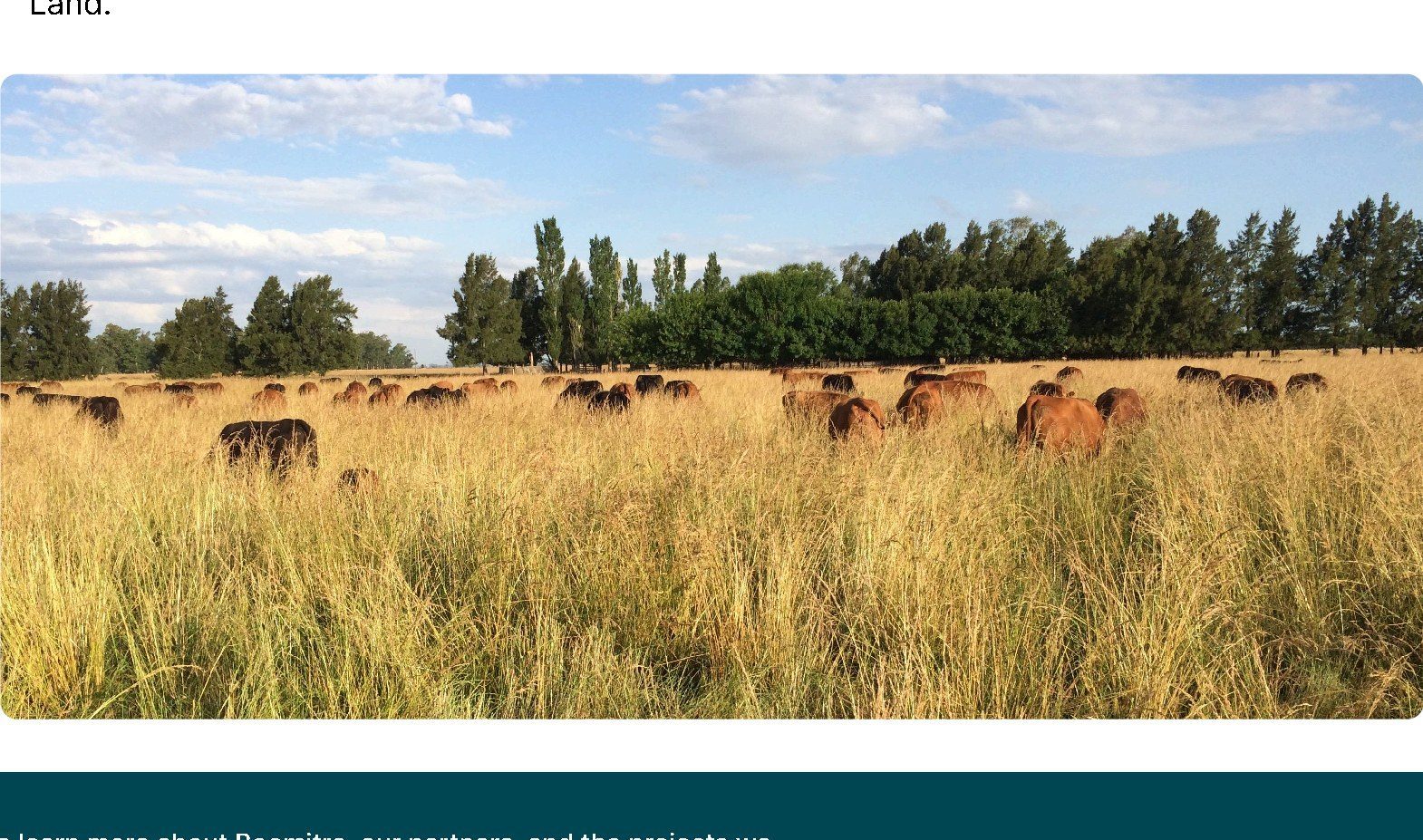
Grassland Restoration in Argentina
Ranchers across 30,900 hectares of the Pampas moving to rotational and high-density grazing with better water management, rebuilding the soil and storing carbon underground, with Aves Argentinas and BirdLife International as partners.
The project in numbers
The developer’s figures, as stated in its documents.
30,900hectares of Pampas grassland
= 2,000 hectares
100,000tons of CO₂ removed to date
= 5,000 tons
500,000tons of CO₂ a year projected at scale
= 20,000 tons
Key facts
Improved Grassland Management
- Methodology
- Verra VM0042
- Labels
- CORSIA eligible · CCB expected · CCP pending
- Offtake
- Rio Tinto · long-term agreement, May 2025
- Developer
- Boomitra · with Aves Argentinas, BirdLife International
SDG icons © United Nations. The content of this page has not been approved by the United Nations and does not reflect the views of the United Nations or its officials or Member States. un.org/sustainabledevelopment
Integrity
Soil carbon on working ranches, with two of the region's conservation bodies inside the project and most of the money going to the people doing the grazing.
Draft profile, pending review
-
Additional
Ranchers change how they graze and manage water; the credit revenue pays for it, and 75% of gross revenue goes to ranchers and implementation partners.
-
Permanent
Carbon stored in soil and roots across 30,900 hectares under Verra's VM0042 methodology, with a pathway to 200,000 hectares; Rio Tinto's long-term offtake (May 2025) finances the work for years ahead.
-
Measured
Verified under Verra VM0042; CORSIA-eligible; CCB certification expected; CCP tagging expected retroactively on VM0042 v3. Issuance status to confirm on the Verra registry.
-
People and nature
Endangered temperate grassland, one of the most biodiverse and threatened biomes; a new biodiversity and soil-carbon research station in the Aguapey river basin; proceeds reinvested in beekeeping, ecotourism and land management.
On the record
- Standard
- Verra VCS · 3291
- Methodology
- Verra VM0042
- Labels
- CORSIA eligible · CCB expected · CCP pending
Certifications
- Verra VCS (project 3291)
- Climate, Community & Biodiversity (CCB) certification expected
- Verra VCS 3291 under methodology VM0042.
- CORSIA eligible; CCB certification expected; CCP label pending (expected retroactively on the release of VM0042 version 3). Ratings: none named.
- Long-term offtake agreement with Rio Tinto (May 2025); the Paraguay volumes of VCS 3291 are offtaken by the Singapore Government.
What the project does
Across the Pampas and the temperate grasslands of north-east Argentina, ranchers are changing how they graze: moving herds through smaller paddocks at higher density, resting the grass, and managing water. The grass recovers, roots go deeper, and carbon is stored in the soil, where fire and drought do not release it. The project covers 30,900 hectares today, with a pathway to 200,000, and is the Argentine part of the Argentina–Paraguay project registered with Verra as VCS 3291.
Aves Argentinas and BirdLife International are partners, through the Alianza del Pastizal that unites ranchers, scientists and conservationists across South America’s grasslands, and the project has set up a research station on biodiversity and soil carbon in the Aguapey river basin. Rio Tinto signed a long-term offtake in May 2025 after its own due diligence; 75% of gross revenue goes to the ranchers and the partners doing the work.
Sources
Every figure on this page comes from these documents and is reproduced as stated; Lignum & Bloom has not independently verified it.
- Boomitra Grassland Restoration in Argentina sheet (Boomitra_VCS3291(Argentina)[3].pdf) · 2026 (copyright line; received 2026-10-20)