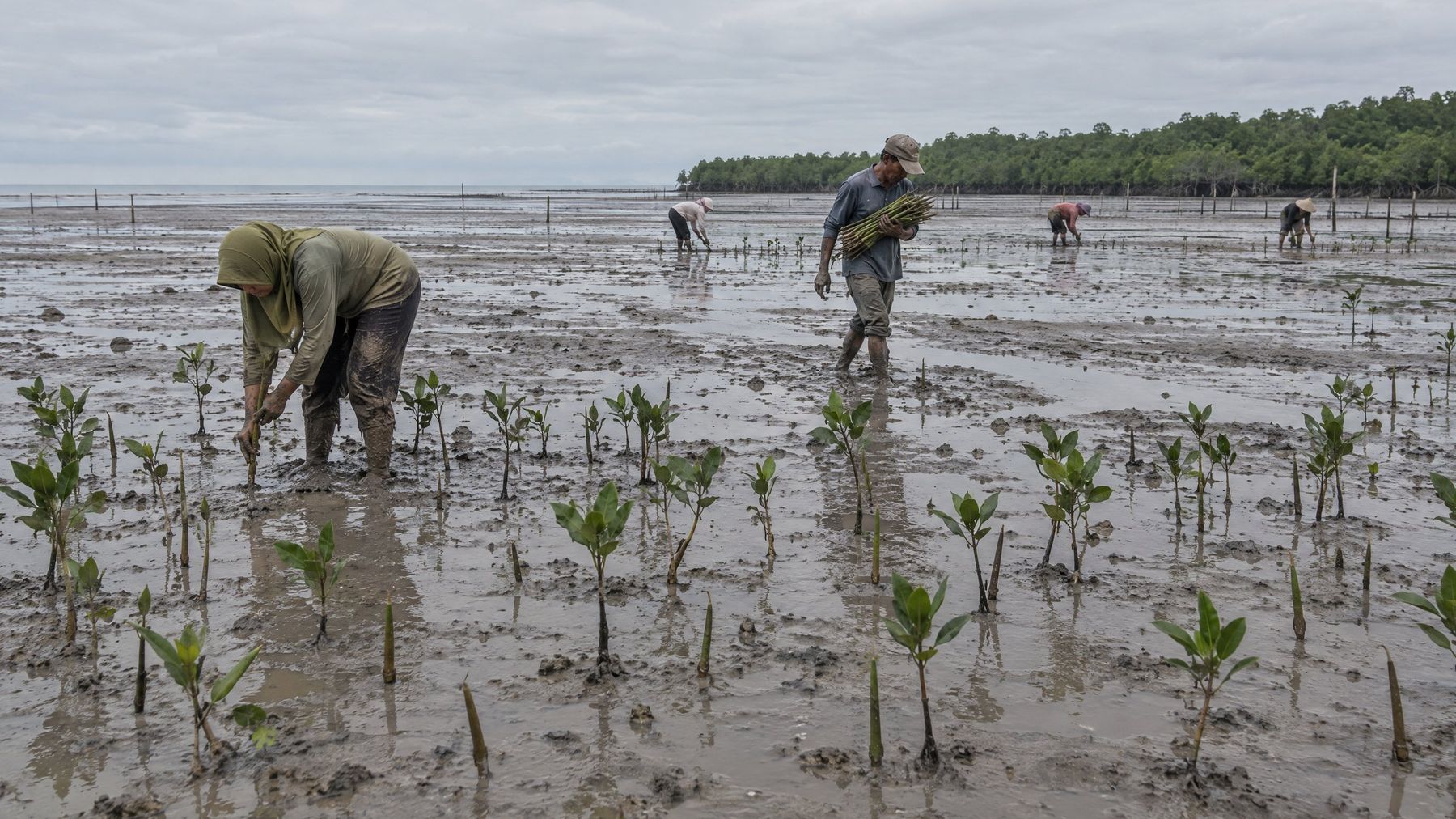
Indonesia Mangrove Restoration
Mangroves replanted across 2,000 hectares of abandoned shrimp ponds on Sumatra's coast, where aquaculture cleared 60% of the forest.
The project in numbers
The developer’s figures, as stated in its documents.
2,000hectares of mangrove
= 100 hectares
15,000tons of CO₂e a year
= 500 tons
200local jobs
= 10 jobs
Key facts
Mangrove Reforestation
- Standard
- Verra VCS · CCB · registry ID coming soon
- Jobs
- about 200 · 40% held by women
- Developer
- Arborify


SDG icons © United Nations. The content of this page has not been approved by the United Nations and does not reflect the views of the United Nations or its officials or Member States. un.org/sustainabledevelopment
Integrity
Mangroves store far more carbon per hectare than inland forest, and they protect the coastal villages and fisheries around them.
Draft profile, pending review
-
Additional
The project exists only for its carbon; the sale of credits is its only revenue.
-
Permanent
The mangroves are managed professionally for 40 years, after which they grow on as a self-sustaining coastal forest.
-
Measured
Credits are issued from field samples and satellite monitoring, verified under Verra and registered in Indonesia's national registry (SRN).
-
People and nature
About 200 local jobs, 40% held by women; household incomes up 20% through fisheries and ecotourism; fish nurseries and habitat for 30 migratory bird species.
Certifications
- Verra VCS (registry ID coming soon)
- Climate, Community & Biodiversity Standards (CCB)
What the project does
In the last thirty years Indonesia has lost about 40% of its mangroves, most of them to shrimp and fish ponds, many of which now lie abandoned. In North Sumatra 60% of the original mangrove forest has gone, and with it the coast’s defence against storms and the nurseries its fisheries depend on.
The project replants mangroves across 2,000 hectares of that coast, removing about 15,000 tons of CO₂e a year. It has created about 200 local jobs, 40% of them held by women, and the forest is managed for 40 years before it is left to grow on as a self-sustaining coastal ecosystem.
Sources
Every figure on this page comes from these documents and is reproduced as stated; Lignum & Bloom has not independently verified it.
- Arborify project page, arborify.com/projects/imr · read 2026-10-05