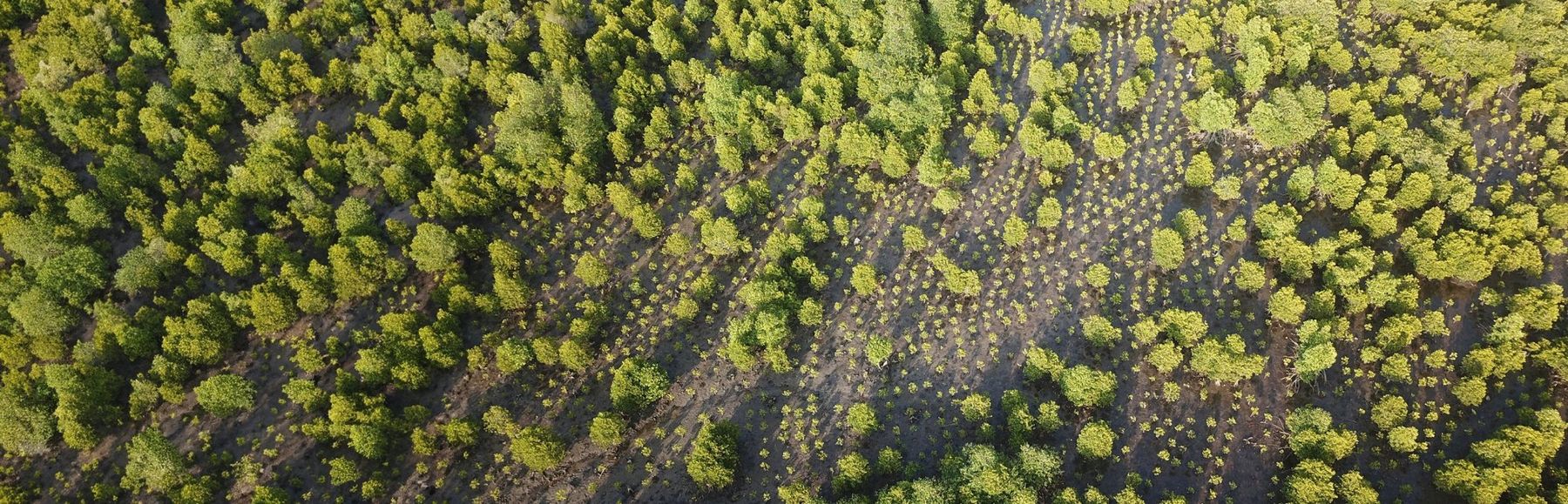
Mangroves Myanmar
2,146 hectares of degraded mangrove habitat in the Ayeyarwady delta planted back, with Myanmar's first mangrove gene bank holding 64 species.
The project in numbers
The developer’s figures, as stated in its documents.
2,146hectares of mangrove restored
= 100 hectares
2,500,000mangroves planted
= 100,000 mangroves
184,006tons of CO₂e a year, developer’s figure
= 10,000 tons
475people served by the new bridge
= 20 people
Key facts
Mangrove Reforestation
- Methodology
- CDM AR-AM0014 v3
- Partner
- Worldview International Foundation · with Forliance
SDG icons © United Nations. The content of this page has not been approved by the United Nations and does not reflect the views of the United Nations or its officials or Member States. un.org/sustainabledevelopment
Integrity
A mangrove restoration run with the coastal communities, prioritising low-income families for its jobs, and the first gene bank of Myanmar's mangrove species.
Draft profile, pending review
-
Additional
Degraded mangrove habitat restored under a methodology built for it (CDM AR-AM0014), paid for by carbon finance.
-
Permanent
Crediting runs 2015 to 2035, with 24% of credits held in the VCS buffer pool against loss.
-
Measured
Certified under the Verified Carbon Standard (Verra 1764), with removals verified independently.
-
People and nature
Jobs paid above average wages, wells and clay water pots for safe drinking water, training and a revolving fund for small businesses, and habitat for fish, dugongs and elephants.
On the record
- Standard
- Verra VCS · 1764
- Methodology
- CDM AR-AM0014 v3
- Crediting period
- 2015–2035
- Buffer
- 24%
Certifications
- Verified Carbon Standard (Verra 1764)
- Verified Carbon Standard, Verra 1764, under CDM methodology AR-AM0014 v03.0.
- Labels and ratings: none documented in the sources.
- Permanence: 24% of credits contributed to the VCS buffer pool; crediting period 2015–2035; the mangrove ecosystem is to be managed sustainably and maintained in the long term.
What the project does
The project restores and manages mangroves across 2,146 hectares of degraded coast in Myanmar’s Ayeyarwady delta, removing about 184,006 tons of CO₂e a year. The forest lowers the risk of floods and storm surges, keeps salt water off low-lying farmland, and gives fish new places to breed, which supports the delta’s small-scale fishermen.
Local people take part in every stage, and low-income families are hired first, at above-average wages. Around the planting the project has built wells and a 90-foot wooden bridge, trained coastal residents to make cookstoves, and set up a revolving fund for small businesses.
Sources
Every figure on this page comes from these documents and is reproduced as stated; Lignum & Bloom has not independently verified it.
- Forliance Mangroves Myanmar factsheet (FORLIANCE-Mangroves_Myanmar_factsheet.pdf) · 2025-03 (last updated March 2025)
- Forliance project page, Mangroves Myanmar (forliance.com), saved as forliance-mangroves-myanmar.txt · 2025-01-08 (page last updated; read 2026-10-05)