From the ground

Dispatches from the people who plant, cook, fish and keep watch, in their own words.

La Primavera nursery, Vichada, ColombiaLivelihoods

Where every tree begins

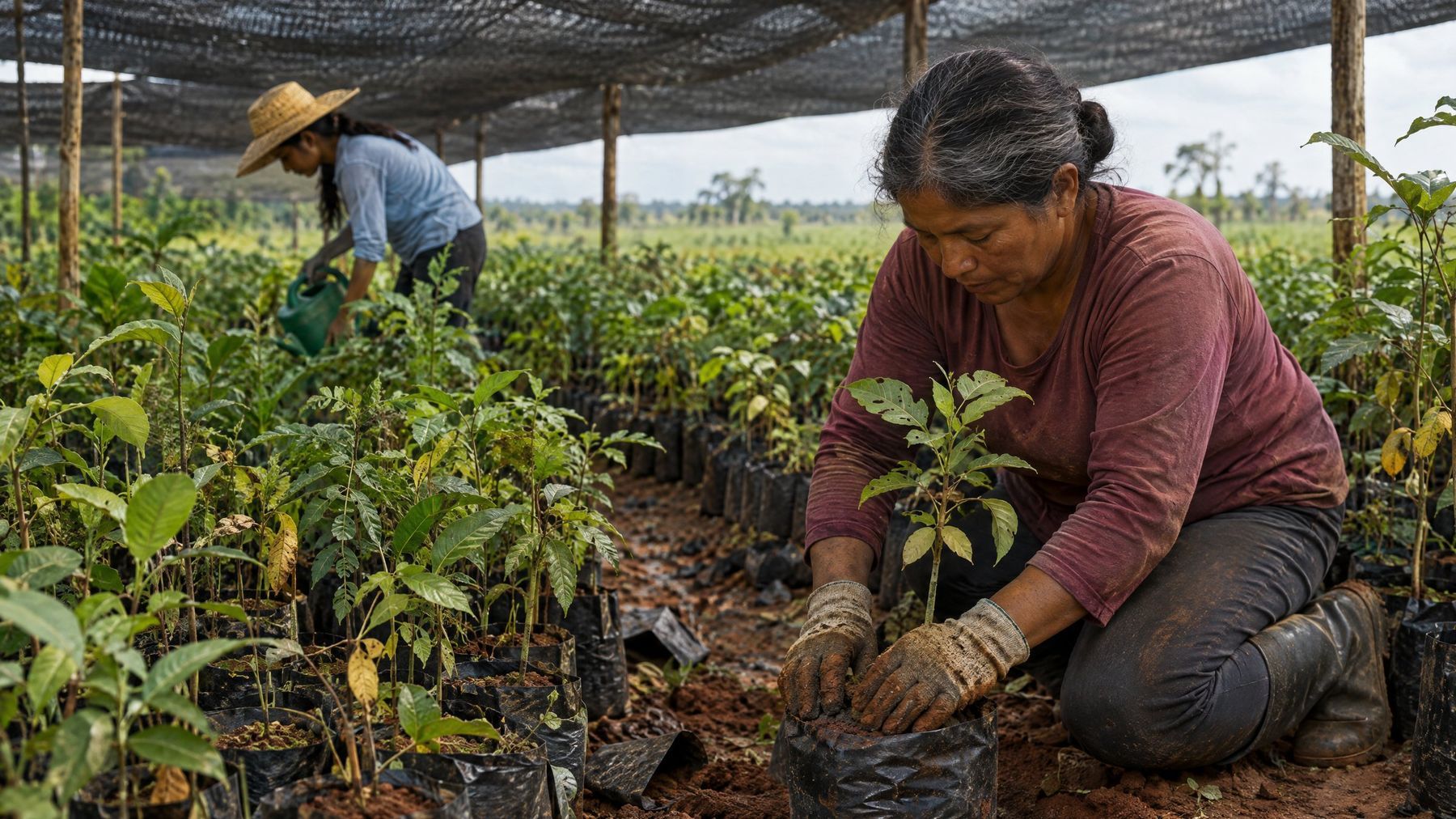
Every tree on the project starts in a nursery at La Primavera. Luz Marina Gaitán runs it with a team of twenty-two, most of them women from the farms around it.

The nursery at La Primavera holds four hundred thousand seedlings at the height of the season, in long rows of black bags under shade cloth. Luz Marina Gaitán knows most of the species by their leaves from across the yard.

Read the full storyClose the story

She came to the project in 2019 as a planter, paid by the day. Now she supervises the nursery, plans the sowing around the rains, and trains the new staff. Of her team of twenty-two, seventeen are women, and nine of them had never had a salaried job before.

"Here the pay comes on the same day every month," she says. "That changes what a family can plan."

The work is exacting. Seeds are collected from native trees in the region, so that the forest that grows back is the one that belongs here. Each batch is labelled with its species, source and sowing date, and the seedlings are hardened in full sun for weeks before they leave for the field. A tree raised badly dies in its first dry season.

In September the nursery sent out its first batch for the wet-season planting: twelve thousand seedlings of eight native species, loaded onto trucks before dawn. Luz Marina rode out with the first truck. She says she always does.
Percut Sei Tuan, Deli Serdang, North Sumatra, IndonesiaCoasts

A coastline that holds

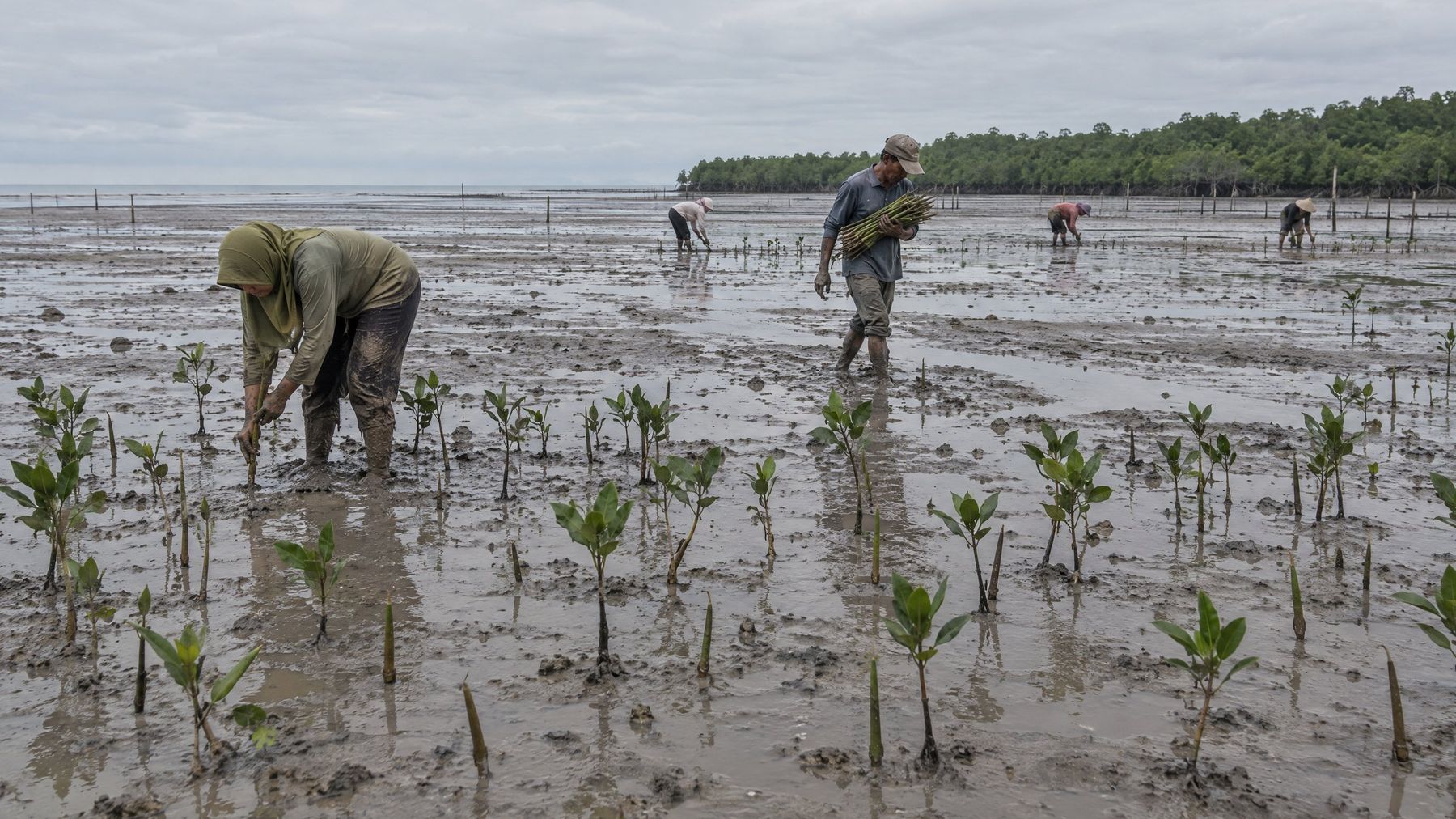
Siti Rahmawati's village lost its mangroves to shrimp ponds in the 1990s, and then lost the shore. This year her planting group put back its hundred-thousandth seedling.

Siti Rahmawati remembers the mangroves of her childhood as a forest you could not walk through. In the 1990s most of them were cleared for shrimp ponds. Within a few years the ponds failed, and the shore began to wash away. At the highest tides the sea now reaches the first row of houses.

Read the full storyClose the story

Her group of thirty-one women and men began planting in 2023. They collect propagules from the surviving trees, raise them in a nursery by the river mouth, and plant them by hand at low tide in the mud of the abandoned ponds. The work is paid by the day, at the same rate for women and men.

"The first year many died," she says. "We learned where the water stays too long, and which species like which mud."

The roots trap silt and slow the waves. Young fish and crabs shelter among them, and the fishermen who work the channels say their catch near the planted areas has improved. The trees store carbon in their trunks and, for much longer, in the waterlogged soil beneath them.

Survival is counted in sample plots twice a year. A tree that dies is replaced, and only the trees that survive count toward the project's carbon. In September the group planted its hundred-thousandth seedling, on the pond where Siti's father once farmed shrimp.

Agou, Plateaux Region, TogoHealth

The kitchen that stopped filling with smoke

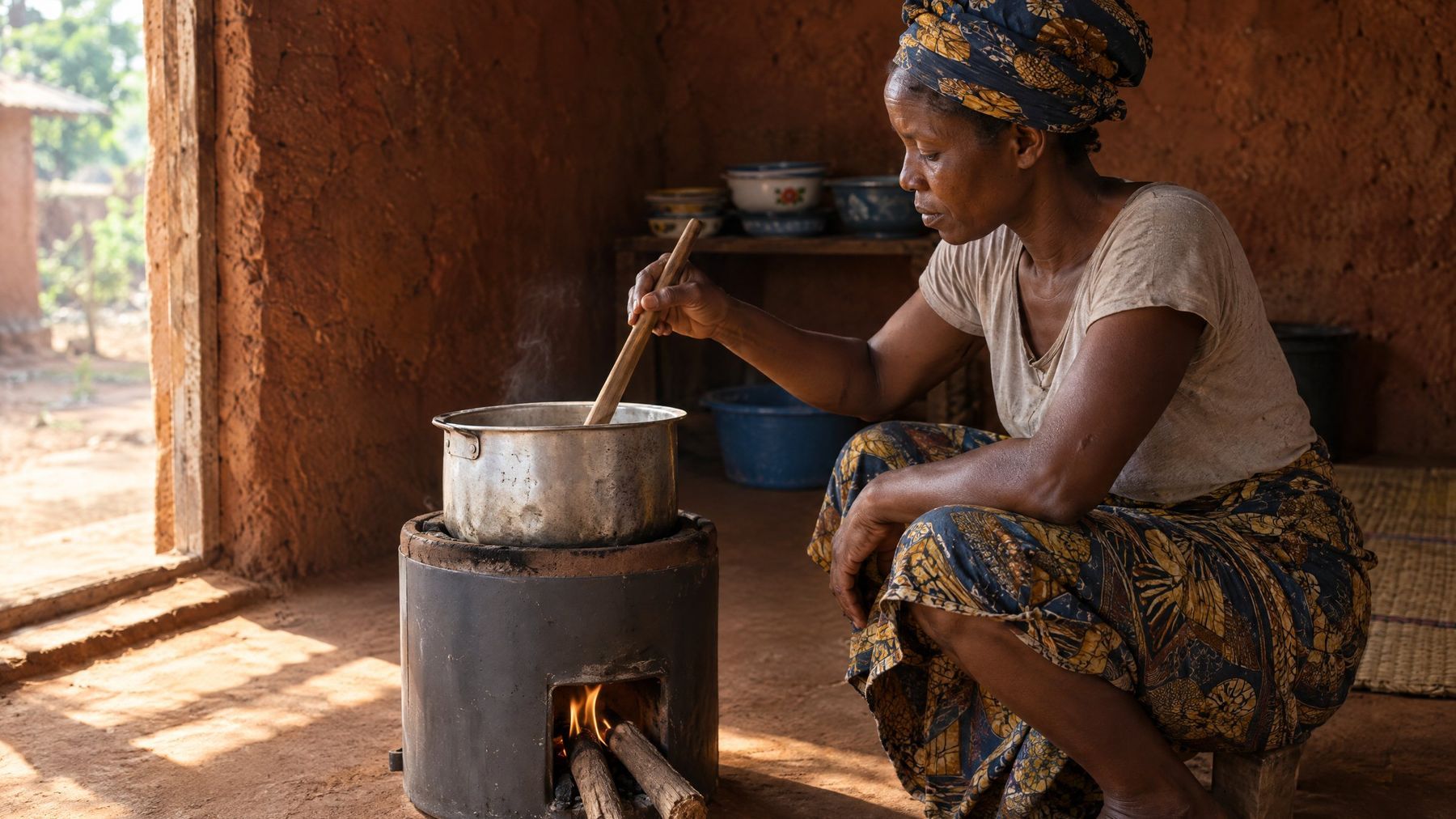
For twenty years Afi Agbodjan cooked over an open fire in a closed room. Since March her kitchen has a stove with a flue, and the evening smoke has gone.

Afi Agbodjan has cooked for her family over three stones and an open fire since she married. Her kitchen is a small room of mud brick behind the house, and for most of those years it filled with smoke every evening. Her youngest son coughed through every rainy season.

Read the full storyClose the story

In March a team from the project came to the village with a stove made of clay and steel, built in a workshop in Kpalimé. It burns about a sixth of the wood an open fire needs, and a short flue carries the smoke out through the wall. The team showed her how to load it and came back twice in the first month to check it was being used.

"I did not believe it would change much," she says. "Then the first week I bought half the wood."

The wood matters as much as the smoke. Afi used to walk two hours to the forest edge three times a week, often with her eldest daughter. Now she goes once. The time has gone into her stall at the Thursday market, where she sells smoked fish, and into school for her daughter, who no longer misses the mornings.

Each stove on the project is logged with its household and visited every year. The fuel it saves is measured in sample households and checked by an independent auditor before any credit is issued. Families pay a small part of the price, which the project's surveys show makes them far more likely to keep using the stove.

When the auditors visited Agou in August, Afi's stove was lit and the kitchen was clear.

Caño Negro, Puerto Carreño, Vichada, ColombiaWildlife

Room for the jaguar

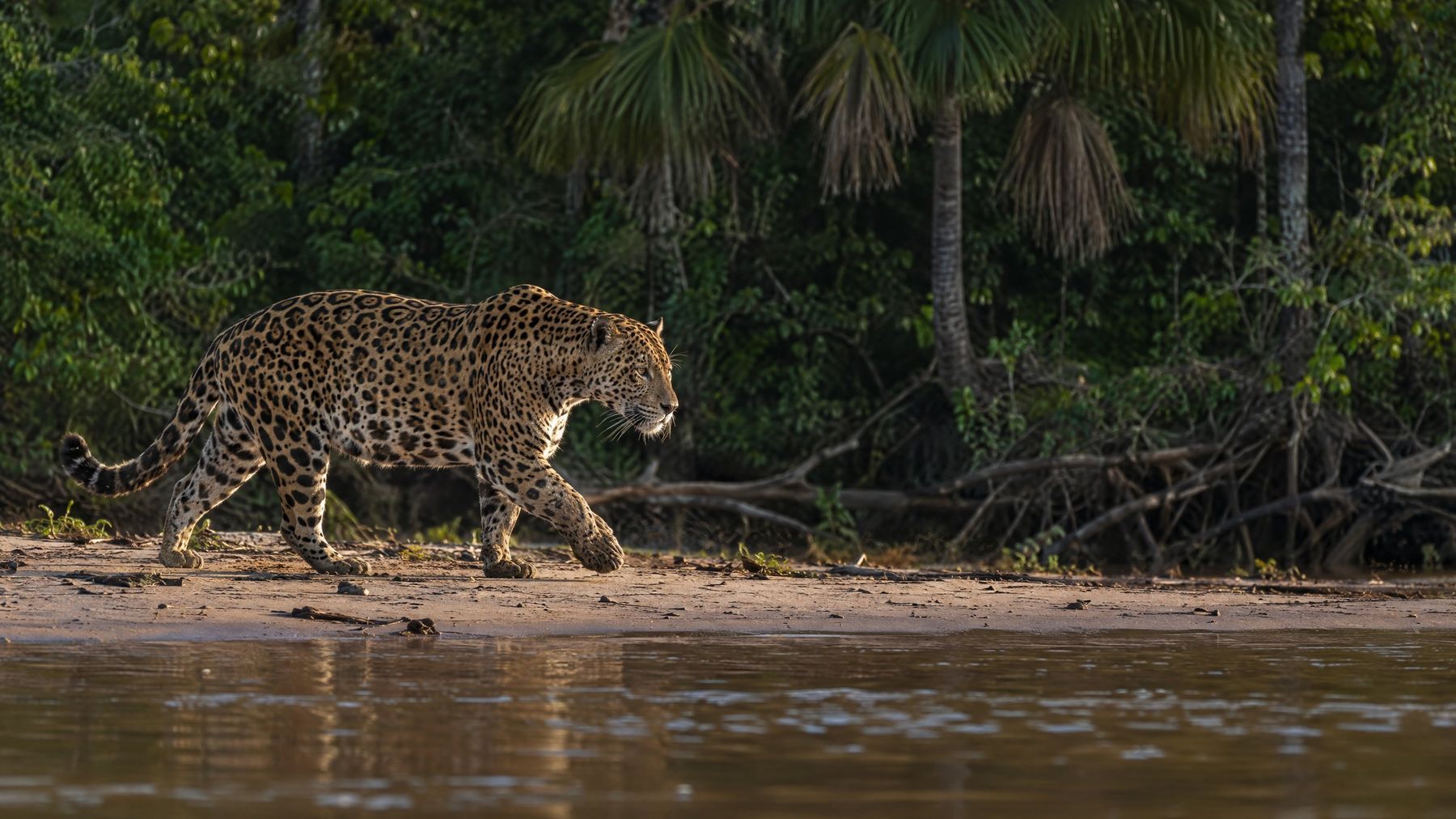
Along a stream where cattle grazed ten years ago, a camera trap caught a jaguar walking the new corridor of native forest in July. Edilberto Rincón has checked those cameras every month since 2021.

Edilberto Rincón grew up in Puerto Carreño, where the Meta river meets the Orinoco. For ten years he worked the cattle ranches of the savanna. Since 2021 he has walked the project's forest corridors instead, checking twenty-six camera traps strapped to trees along the streams.

Read the full storyClose the story

The corridors follow the water. The project plants native species in strips along the caños, linking the patches of gallery forest that survived the ranching years, so that animals can cross the open grassland under cover. The oldest strips are now taller than a man on horseback.

On 14 July a camera at Caño Negro recorded a female jaguar walking north along the corridor at dusk. Two nights later the same camera caught her again, heading back.

"I sat in the truck and watched it four times," Edilberto says. "Then I called my wife."

The jaguar is the headline, but the cameras record much more: tapir, giant anteater, ocelot, deer, and more than two hundred species of bird in the project's surveys. Every record is logged with its date, place and species and sent to the project's ecologists, who report the results each year alongside the carbon.

A single sighting does not make a population, and the ecologists are careful about that in their reports. What it shows is that the corridor is being used, for the reason it was planted.

El Apache Ranch, northern MexicoLand

The best grass in ten years

Jorge Pando split his ranch into small paddocks and moved his cattle through them. A year later, the satellite images showed the best ground cover his land had had in a decade.

For generations the cattle on the ranches of northern Mexico grazed a few large paddocks all year. The grass never had time to grow back, the soil hardened and blew away, and in dry years there was little left to graze.

Read the full storyClose the story

On El Apache Ranch, Jorge Pando changed that. With electric fencing and new water points, the land is now divided into many small paddocks, and the herd moves through them in turn, eating hard and moving on. Each paddock then rests for weeks before the cattle return.

The project's engineers track the change from space. Satellite images measure how much of the ground is covered by living grass, and soil samples confirm how much carbon the roots are putting back underground. After the first year, El Apache's ground cover was the best in a decade.

"We worked with geospatial engineers at Boomitra who showed us satellite imagery of our land," Jorge says. "One year after making changes, our ranch obtained the best basal cover of the last 10 years."

The same practice runs across 158 ranches and community ejidos in the Chihuahuan and Sonoran deserts. On the best-managed ranch the soil now stores 3.26 tons of carbon dioxide per hectare each year. At least three-quarters of the money from the credits goes back to the ranchers who do the work.